

This Dark Night: Preface
Emily Jane Brontë: Ideas & Identities

I work to place Emily Brontë in the history of more modern ways of thinking.
Among a number of other honors, to aid in researching and writing This Dark Night, Deborah Lutz was awarded a Public Scholar Fellowship by the National Endowment for the Humanities.
It was terminated by the United States Department of Government Efficiency (DOGE).
In May 2025, a class action lawsuit was brought against the Trump Administration to restore the funds and a year later (7 May 2026), U.S. District Judge Colleen McMahon delivered the 143-page decision, granting summary judgment to the affected scholarly organizations and individual plaintiffs.
Deborah Lutz’s more modern way of thinking about Emily Jane may have raised the ire of the DOGE Demolition Crew but as if by some Yorkshire magic, on the day she learned she would lose her award (before the judge’s May 2026 ruling), Lutz received her funding.
This Dark Night has been published. Today, we begin discussing it...
Welcome!
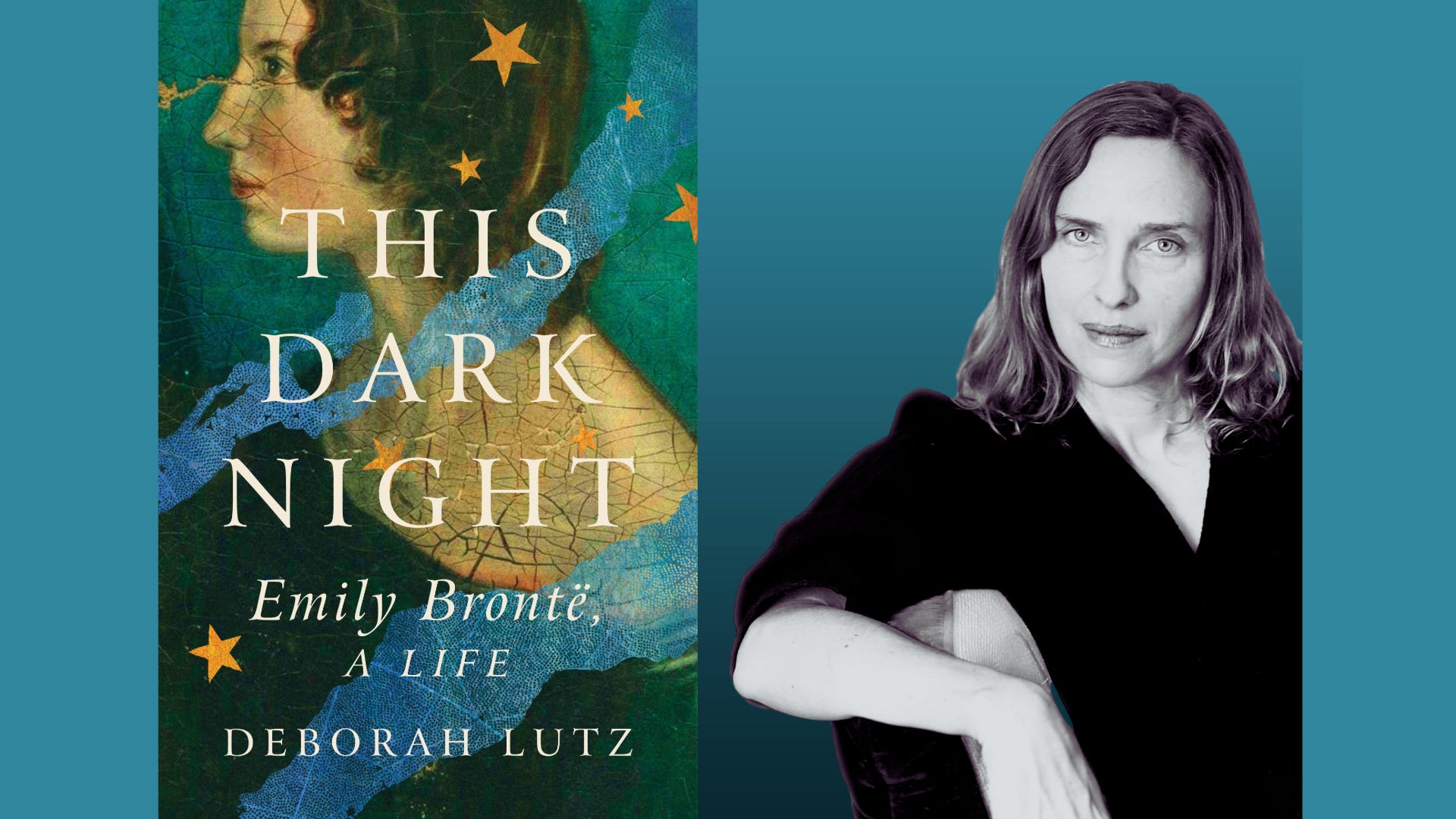
If you are just joining us, visit this Introduction post to learn more about Deborah Lutz and the biography, This Dark Night: Emily Brontë, a Life. You’ll find a Reading Schedule there, too!
A Few Things First…
When it comes to writing a biography, a lot is left to speculation. When it comes to the Brontës a lot has been left to invention. Biographers have been creating stories about the famous family going as far back as Charlotte’s first interpretations of her younger sister and her sister’s novel, Wuthering Heights.1
Responsible biographers provide readers with copious notes—to add clarification and so that we may scramble down additional rabbit holes, forming our own questions and coming to our own conclusions. Lutz has given us 45+ pages of chapter-specific notes to aid in our understanding of her interpretation of Emily Jane—use them!
Place a sticky tab on page 269 and when you complete a chapter, review its notes.
Also, browse the Select Bibliography to review Primary and Secondary Sources.
Also, I suggest you find a copy of Wuthering Heights and a collection of poetry written by Emily Jane Brontë…you’ll certainly be inspired to do some further reading. ♡
Ideas and Identities
Deborah Lutz uses the phrase ideas and identities to describe some of the especially modern interpretations of Emily Jane. I think these terms will serve as my guiding focus in each post—I will choose one or two ideas and/or identities about which to write and leave the rest of each chapter up to you for discussion. Let’s begin…
‘Themselves Wayward and Odd’
In her Preface, Deborah Lutz writes, “Women authors who were themselves wayward and odd were some of the first to realize [Wuthering Heights’] genius.”

I must confess, I came to the genius that is Emily Dickinson late in life. It was my good friend’s 2006 purchase of Emily Dickinson’s Herbarium: A Facsimile Edition and later, devouring Marta McDowell’s Emily Dickinson's Gardening Life: The Plants and Places That Inspired the Iconic Poet, which made me re-examine Dickinson in a new light: as a naturalist.
As both, poet and naturalist, Emily Dickinson would appreciate Wuthering Heights. It is filled with flora, fauna and fungi. A quick glance at Lutz’s notes directs me to The Letters of Emily Dickinson and I have an opportunity to read the author’s opinion of both the novel and its author.2
The novel struck Emily Dickinson as ‘electric,” and she called Emily Brontë ‘gigantic.’
She used these adjectives to describe the content and creator of Wuthering Heights in letters to Mrs. J. G. Holland, written in 1881 and 1883.
It was on Christmas 1881 Dickinson wrote to her dear friend, Elizabeth Holland, and casually referred to Emily Jane as ‘gigantic.’ The full statement, “Reminded again of gigantic Emily Brontë, of whom her Charlotte said, ‘Full of ruth for others, on herself she had no mercy,’” ends with Dickinson’s own self-reflection, “The hearts that never lean, must fall. To moan is justified.”3
To what event is this sad reflection referring? Emily Dickinson had recently lost her beloved eight-year-old nephew to typhoid. She is grieving. Writing to her close friend, Dickinson (like so many young female writers) aligns herself with Emily Jane. We see this again-and-again—decades of women and girls—influenced and inspired by what is essentially lore surrounding a young woman whose life we still know little about. 4
American Emily greatly admired English Emily Jane’s poetry, calling it, ‘marvellous verse,” and repeatedly offering to mail copies of ‘Currer, Ellis & Acton Bell Poems,’ to friends. Surprisingly, a number of her friends declined; they were simply disinterested in reading the poetry of Charlotte, Emily and Anne Brontë.5
Her sometimes editor Thomas Wentworth Higginson did not deny his friend’s request to read the Brontës’ poetry and when she died, he read aloud Emily Jane Brontë’s well-known poem, “No Coward Soul is Mine,” at Dickinson’s funeral.
If you want to read more about how Emily Jane Brontë’s life and works influenced Emily Dickinson and you are a member of the Brontë Society, you may wish to seek, “Emily Brontë and Emily Dickinson: Parallel Lives on Opposing Shores,” an article written by Wendy Anne Powers for the Brontë Studies journal, Vol 32, 2007 - Issue 2.
It is as if she could tear up all that we know human beings by, and fill these unrecognisable transparences with such a gust of life that they transcend reality.
A detailed account of twenty-two-year-old Virginia Woolf’s visit to the home of the Brontë family, appeared in The Guardian on 21 December 1904. Unsigned, the honest account of her trip, was the first item written by Woolf to be accepted for publication.
I discovered the article when I was doing research on Emily Jane Brontë’s little ‘wood’ stool and I was amused by the fact that Woolf simply cannot romanticize Keighley and Haworth as so many social media influencers today are apt to do; she enlightens dewy-eyed thrill-seekers, “Haworth did certainly strike one not exactly as gloomy, but, what is worse for artistic purposes, as dingy and commonplace.”
Nearly two decades later, in 1925, Woolf published The Common Reader, in which she discussed Charlotte Brontë’s Jane Eyre and Emily Jane’s Wuthering Heights.
The pull quote shared above (part of which is found on page xiv in the Preface of This Dark Night) comes from The Common Reader. I thought you might enjoy reading the full excerpt, the portion dedicated to Emily Jane Brontë and Wuthering Heights:
Wuthering Heights is a more difficult book to understand than Jane Eyre, because Emily was a greater poet than Charlotte. When Charlotte wrote she said with eloquence and splendour and passion ‘I love,’ ‘I hate,’ ‘I suffer.’ Her experience, though more intense, is on a level with our own. But there is no I in Wuthering Heights. There are no governesses. There are no employers. There is love, but it is not the love of men and women. Emily was inspired by some more general conception. The impulse which urged her to create was not her own suffering or her own injuries. She looked out upon a world cleft into gigantic disorder and felt within her the power to unite it in a book. That gigantic ambition is to be felt throughout the novel — a struggle, half thwarted but of superb conviction, to say something through the mouths of her characters which is not merely ‘I love’ or ‘I hate,’ but ‘we, the whole human race’ and ‘you, the eternal powers…,’ the sentence remains unfinished. It is not strange that it should be so; rather it is astonishing that she can make us feel what she had it in her to say at all. It surges up in the half-articulate words of Catherine Earnshaw, ‘If all else perished and he remained, I should still continue to be; and if all else remained and he were annihilated, the universe would turn to a mighty stranger; I should not seem part of it.’ It breaks out again in the presence of the dead. ‘I see a repose that neither earth nor hell can break, and I feel an assurance of the endless and shadowless hereafter — the eternity they have entered — where life is boundless in its duration, and love in its sympathy and joy in its fulness.’ It is this suggestion of power underlying the apparitions of human nature, and lifting them up into the presence of greatness that gives the book its huge stature among other novels. But it was not enough for Emily Brontë to write a few lyrics, to utter a cry, to express a creed. In her poems she did this once and for all, and her poems will perhaps outlast her novel. But she was novelist as well as poet. She must take upon herself a more laborious and a more ungrateful task. She must face the fact of other existences, grapple with the mechanism of external things, build up, in recognisable shape, farms and houses and report the speeches of men and women who existed independently of herself. And so we reach these summits of emotion not by rant or rhapsody but by hearing a girl sing old songs to herself as she rocks in the branches of a tree; by watching the moor sheep crop the turf; by listening to the soft wind breathing through the grass. The life at the farm with all its absurdities and its improbability is laid open to us. We are given every opportunity of comparing Wuthering Heights with a real farm and Heathcliff with a real man. How, we are allowed to ask, can there be truth or insight or the finer shades of emotion in men and women who so little resemble what we have seen ourselves? But even as we ask it we see in Heathcliff the brother that a sister of genius might have seen; he is impossible we say, but nevertheless no boy in literature has so vivid an existence as his. So it is with the two Catherines; never could women feel as they do or act in their manner, we say. All the same, they are the most lovable women in English fiction. It is as if she could tear up all that we know human beings by, and fill these unrecognisable transparences with such a gust of life that they transcend reality. Hers, then, is the rarest of all powers. She could free life from its dependence on facts; with a few touches indicate the spirit of a face so that it needs no body; by speaking of the moor make the wind blow and the thunder roar.
Letters of Emily Dickinson (1894) and Virginia Woolf’s The Common Reader, are both available to read for free on Internet Archive. Register for an account to Favorite, borrow, bookmark and organize titles into labeled folders!

(If You Wish) Share Your Thoughts…
How much do you already know about the life and work of Emily Jane Brontë?
When you pick up a Brontë biography, do you seek information which is widely-known and built on a foundation of primary resources or, do you rather enjoy reading illuminative interpretation?
After reading the Preface, what are your initial thoughts? Are you looking forward to (or, hesitant about) reading this interpretation of Emily Jane Brontë’s short life?
You may be surprised to learn I know little about the whole life of Emily Jane Brontë. I have learned a lot about EJB’s writing life, but as I’ve always declared, I’m not one of those Brontë-obsessed ‘girlies,’ who has dreamed of wandering the moors since I was a child. That is partially why I decided to embrace the results of my June poll and host a Brontë Biography Book Club!
Despite owning a number of biographies of Emily Jane, I’ve only read two: Edward Chitham’s A Life of Emily Brontë6 and Romer Wilson’s All Alone: The Life and Private History of Emily Jane Brontë.7
After reading Deborah Lutz’s Preface, I predict This Dark Night will be a combination of both of those works. As an academic, Deborah Lutz will provide us with plenty of primary resourced-facts, while interpreting her subject’s life through a contemporary lens. Keeping in mind DOGE’s decision to terminate the project’s funding, we should not be surprised when the author explores ‘interpretation and speculation’ embraced by a modern generation of Emilites.8
Finally, I should mention, I am writing this post before I’ve read any part of This Dark Night. I’ve read the Preface and consulted Lutz’s notes. My initial thought is that this biography will likely cause a stir among those obsessed with pedantry related to the Brontë family. Gratefully, I’m not one of them.
I have oftentimes said I appreciate how Emily Jane kept secrets. Little is known about her and that is exactly what appeals to me. She conceived poetry and fiction, I believe, first and foremost for herself. When she does not explicitly detail something, it is left to interpretation.
Her biography is the same: we conjure and manipulate what is known. This is based on our personal experiences (our narrative)—we cannot consider situated experiences of which we have no knowledge.
Every biographer leaves a part of herself in the chronicle of her subject. As readers, I think we do, too. We interpret the subject through our unique lens and unconsciously criticize each biographer, and her handling of the details. This is another reason why reading endnotes and consulting primary sources is important!
I am eager to continue reading! Please comment (if you would rather not share your thoughts publicly, you are welcome to message me). Also, if you know someone who may wish to follow along, please share in Notes—this read-along is free to everyone!
Bell, Currer. "Biographical Notice of Ellis and Acton Bell." Wuthering Heights, edited by Alexander Lewis, W.W. Norton & Company, 2019, pp. 300-306.
Dickinson, Emily. The Letters of Emily Dickinson. Edited by Cristanne Miller and Domhnall Mitchell, The Belknap Press of Harvard University Press, 2024.
See also: The Emily Dickinson Collection at Harvard Library
Dickinson, Emily. Letters of Emily Dickinson (Volume I). Edited by Mabel Loomis Todd, Roberts Brothers, University Press, John Wilson & Son, Cambridge, USA, 1894.
This is the subject of another Brontë biographer, Claire O’Callaghan’s, forthcoming book (working title: Almost Haunted).
MacKenzie, Cindy, and Jane Donahue Eberwein. Reading Emily Dickinson’s Letters : Critical Essays. University of Massachusetts Press, 2009, http://site.ebrary.com/id/11214420.
Chitham, Edward. A Life of Emily Brontë. Rev. ed, Amberley, 2010.
Wilson, Romer, and Unwin Brothers (Firm). All Alone : The Life and Private History of Emily Jane Brontë. Chatto & Windus, 1928.
Since there is no term for the Emily Jane fandom, I’m creating one. ♡
Emilite is a rare metallic mineral which is brittle, imperfect, irregular and opaque… much like Emily Jane Brontë (and oft times, her fandom).
Emilite has a brittle tenacity, this means it will break or shatter when put under sudden stress; while EJB is widely-recognized as strong, we know being anywhere but at home often broke her.
Emilite’s crystal-system is orthorhombic; in mineralogy, this means, light travels through the crystal at different speeds along all three axes, allowing each axis to display a multitude of colors depending on the viewing angle. Isn’t that brilliant?!
The mineral Emilite (Eh-MEEL-ite) is named after Slovakian mineralogist, Emil Makovicky and so, it is pronounced with stress emphasis on the second syllable.
Let’s pronounce Emilite (EM-ih-lite or EM-uh-lite),—a term for an Emily Jane Brontë enthusiast— with stress emphasis on the first syllable! What do you think?
I don't very often read biographies because I am wary of other people interpreting a life based on books/research done by others, opinions based on biographer's life and times not the subject's...to say "it could happen this way because I believe it could" doesn't convince me. And the less original material there is the more I doubt. I am however, interested in EJB. And I'm interested in a different slant on biography-writing which it seems this author pursues. Fingers crossed!
I know very little about Emily Bronte's life. Just what I've picked up from a few Introductions to Bronte books. I want to know what the author was thinking while they were writing. After reading a few biographies of writers, I think often it's impossible to know what they were thinking. I still enjoy reading about author's lives. I guess I'd like to know both academic and interpretations of her life. This author lived among Emily's world as much as she could. Her Preface is poetic and filled with wonder. This speaks well about what the book is going to be!