

Mid-June
Brontë Biographies...and A Poll

Mid-June Notes…
Hello Everyone!
Outside my window my elder is blooming. Elderflowers are the most sweetly-scented of all our summer blooms. She is one of the most magical as well. June as a whole is a magical month here in Pennsylvania, as the fireflies return and our evenings sparkle and shine reflecting their brilliance.
We soon will celebrate the Solstice, too…followed by my birthday!
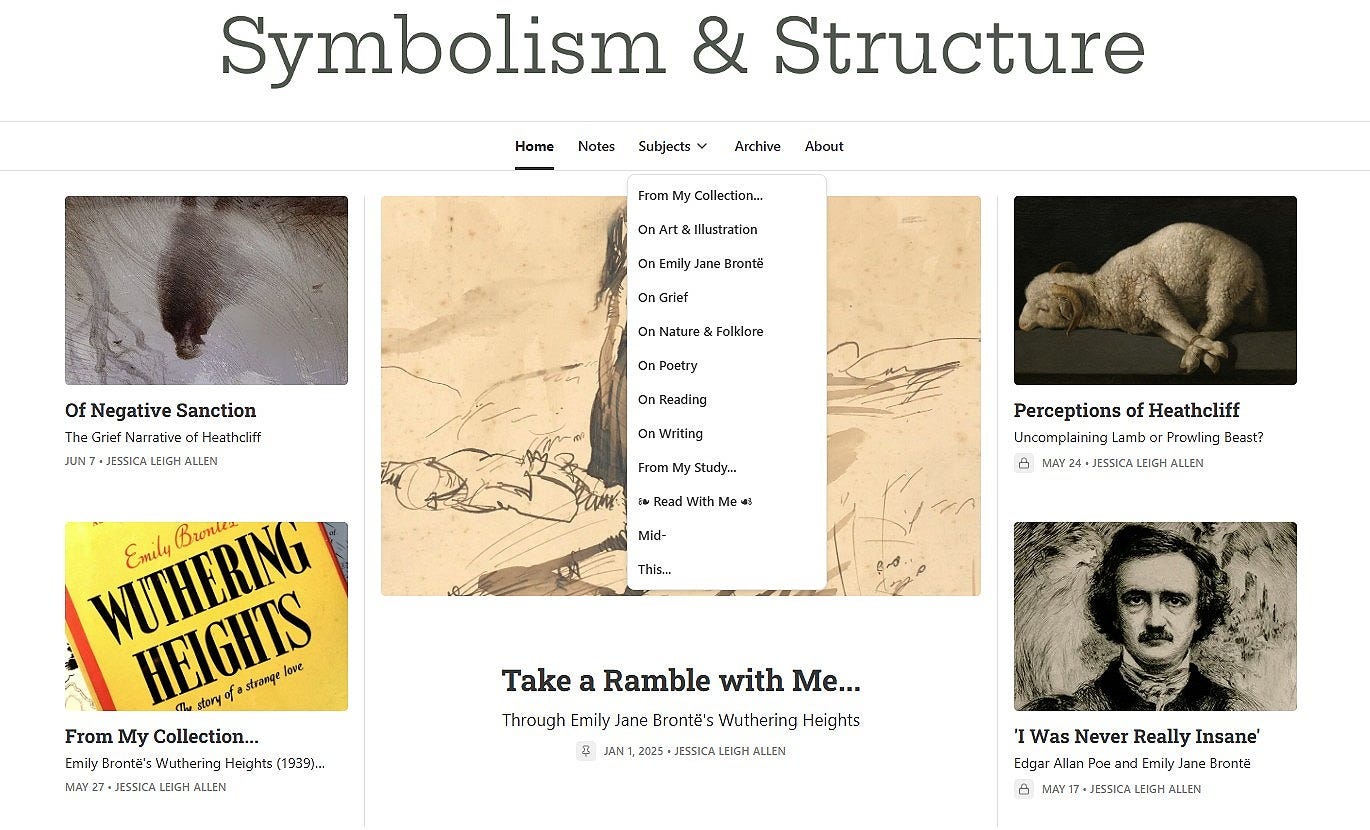
Have You Seen My New Navigation Tool?
Do you search for essays on Symbolism & Structure using the little hand lens icon in the corner? You may wish to explore essays using my dropdown sorted by Subject!
Brontë: A Novel by Glyn Hughes
My mom (always on the lookout for editions of Wuthering Heights I do not already own!) picked up a unique book for me in a local charity shop last week…
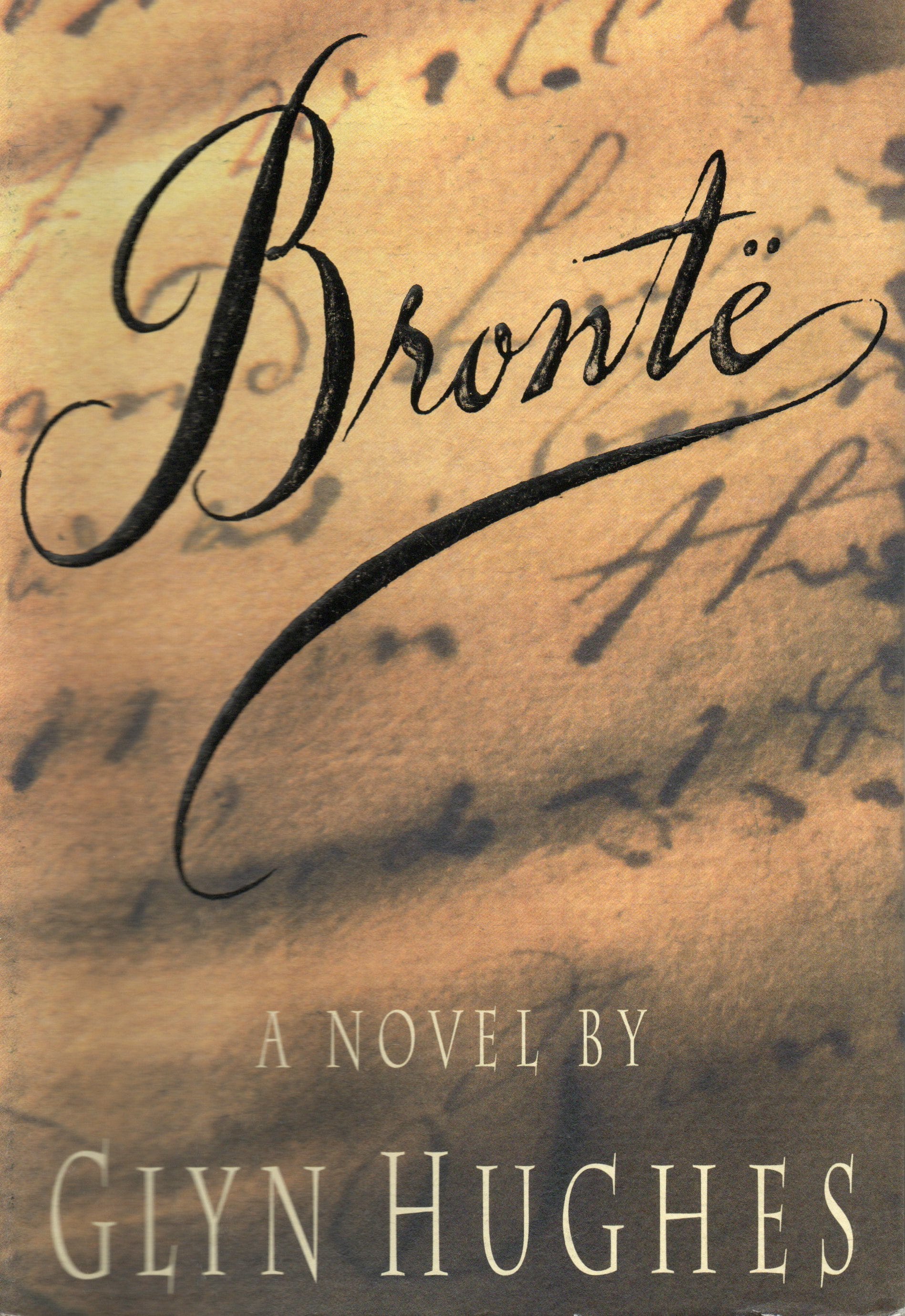
It turns out Brontë is certainly worth the $3 my mom spent on it. Glyn Hughes, who passed away in 2011, is a widely-known, well-respected author, poet and painter and his novel is a fictionalized biography of the talented Brontë siblings.
The Kirkus Review of Brontë:
A gifted Yorkshire novelist tackles his region's most famous literary family, illuminating their inner lives and the sources of their creativity. Hughes (The Rape of the Rose, 1993, etc.) lives not 20 miles from Haworth, staging ground for the Brontës' short, tragic lives, and he ably captures the harsh natural beauty and even harsher human attitudes that informed the siblings' writings. More importantly, he sensitively delineates their thorny personalities: Charlotte, furious at the world for the injustices it visited on a poor, plain parson's daughter, prone to turning her anger on her family before she found a more fulfilling outlet writing Jane Eyre; Branwell, weak and dissipated, but possessed of a genuinely loving heart; Emily, whose mystical connection with the Yorkshire landscape left little room for human ties; and gentle, devout Anne. Their father, the Reverend Patrick Brontë, gets a more measured treatment than some biographers have accorded him; Hughes emphasizes his pride in his daughters over the selfishness that also characterized the minister. The author hews to the known facts about this much-profiled family, though he imagines some intriguing local tales as the foundation for Emily's Wuthering Heights and speculates intelligently about the emotional wellsprings of Charlotte's novels. Sensibly, he focuses more on the siblings' intense relationships among themselves and with the divine order (questioned by all four with anguish) than on their literary achievements, which have been amply examined by generations of critics. Although Hughes paints well-rounded portraits of Charlotte and Emily, he basically reiterates the conclusions drawn by such biographers as Winifred Gérin; he really excels in depicting Anne and Branwell, whose death scenes are almost unbearably moving. The author evokes with fierce passion the dreadful seven months in 1848-49 during which consumption claimed first Branwell, then Emily, and finally Anne, almost equaling in intensity Charlotte's ghastly letters from that period. Nothing really new here, but, still, a sensitive, full-bodied rendering of the always fascinating Brontës.
Pub Date: Oct. 1, 1996
ISBN: 0-312-14816-X
Page Count: 432
Publisher: St. Martin’s
Kirkus Reviews Issue: July 15, 1996
Categories: General Fiction
Days before my mom procured a hardcover edition of Brontë in the charity shop I had begun a Chat to gauge reader interest in a read-along opportunity to be offered in the Autumn. Lots of great suggestions were offered and although I originally intended to offer a new Wuthering Heights read-along, the exchange got me thinking: What about a Brontë biography?
My 9-Week Readers Guide and A Natural History of Wuthering Heights, as most of you know, are already available to Paid subscribers and provide extensive summaries and analyses of all thirty-four chapters of the novel. I receive notifications and am happy to engage in comments from past read-alongs; but I will also be happy to create a new, themed read-along of Wuthering Heights…
I’ve read a few biographies focused on Emily Jane and most recently, Branwell. I read Sharon Wright’s thoughtful examination of Maria—The Mother of the Brontës—earlier this year. And, my shelves include Lucasta Miller’s The Brontë Myth, and Emily Brontë Reappraised (2022) by Brontë Studies editor Claire O’Callaghan. I am looking forward to getting my hands on Deborah Lutz’s new release, This Dark Night (it’s on my birthday wish list!)—her work is always quite brilliant.
Decades of biographers have dedicated pages to examining the Brontë family: often celebrating the trio of genius authoresses (Poor Branwell!). Glyn Hughes, treating a biography like a novel—historical fiction—intrigues me. I’m eager to begin reading this one—and plan to, today! Also…it will be nice to read a biography written from a male perspective rather than that of contemporary female scholars.
I wonder, what of this content be of any interest to you—as a book club selection? I’m going to pop a poll into this Mid-Month post to gauge your interest…
Polls here on Substack are kind of fiddly (you may only provide a single opinion), so if you wish to make more than one choice or add anything to your answer, please share your thoughts in the Comments.
So you may learn more about Lutz’s This Dark Night, I’ll include the Kirkus review:
A meditative reimagining of Emily Brontë’s (1818–1848) brief, mysterious life.
Literary scholar and author Lutz (The Brontë Cabinet: Three Lives in Nine Objects, 2015) approaches her famously private subject within the familiar story of the Brontë family, less as a figure to decode than as a consciousness to inhabit. Drawing on notebooks and manuscripts newly made public through an acquisition now part of the Blavatnik Honresfield Library, including one of Brontë’s poetry books and fragments of her juvenilia, she reconstructs not the outer drama but the inner weather of its most elusive member. The research yields no startling discoveries, but it offers focused insight into Brontë’s writing practice: the way she drafted, recopied, and sometimes destroyed her work as part of a disciplined, almost devotional act. Lutz’s Emily emerges as a material mystic, an artist whose imagination was grounded in the physical; paper, peat, moonlight, animal breath; and whose solitude was less withdrawal than apprenticeship. She situates Emily’s genius within a household alive with artistic energy, “a home in which girls created, performed, and wrote fiction with confidence…never curtailed or censored as being too masculine or unfit for girls.” Later, she writes, the sisters “threw themselves into a wild inventiveness that seemed more real, sometimes, than actual existence,” their creativity rising from loss and solitude, “a kind of empty space or wound that required filling with near-endless lands, people, and tall tales.” With Emerald Fennell’s much-anticipated and already debated film adaptation of Wuthering Heights out this season, Brontë’s work and life are poised for renewed attention. Atmospheric and empathetic rather than revelatory, Lutz goes beyond recording events and facts to immerse readers in Brontë’s way of seeing the world, where imagination and the moorland landscape merge into one continuous vision.
A thoughtful, imaginative portrait that brings fresh interpretation to familiar ground.
Pub Date: May 5, 2026
ISBN: 9781324037118
Page Count: 384
Publisher: Norton
Kirkus Reviews Issue: Feb. 15, 2026
Categories: Biography & Memoir | Historical & Military | General Biography & Memoir
Personally, I believe every author’s life informs his or her work. This is why I collect biographies detailing the life of Emily Jane Brontë—I wish to learn more about those experiences which informed her conception of Wuthering Heights. Admittedly, I have not read all of the biographies I own. As the reviewers above point out, ‘nothing really new,’ and ‘no startling discoveries,’ (especially as pertain to Emily Jane) tend to be the case…
It is soon summer though, and summer (according to all the socials) is time for sitting in the garden with a tall glass of iced tea and…a book. Hmmm, what shall I read? ♡

It might be fun to read the Glyn Hughes and the Deborah Lutz and compare? Different formats, male/female authors, 30 years apart…might be redundant but they’re not that long, page count wise. As long as one can get the Hughes somewhat easily…